
Home / Insurance
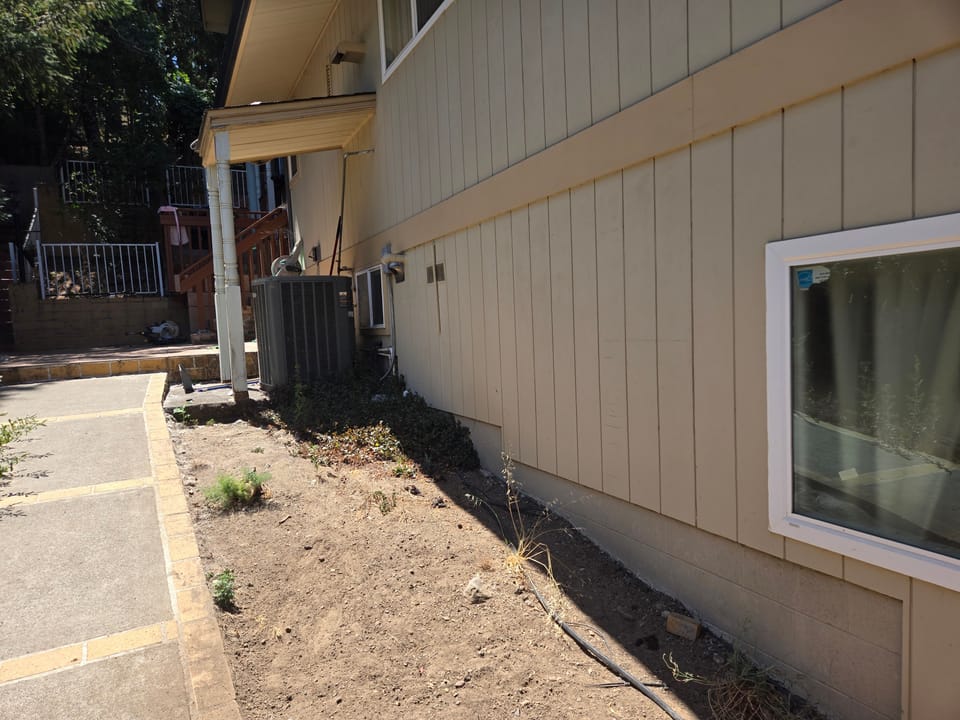
Will Zone 0 affect my home insurance?
Updated October 18, 2026
It already can. The Board of Forestry's Zone 0 rule is not in force, but many insurers look at the first 5 feet now, mostly through IBHS Wildfire Prepared Home (WPH). That matters more for getting and keeping coverage than for the discount. Meeting the Board of Forestry rule alone may not be enough.
Two goals, two lists
- Keep your insurance or lower the bill: use the insurer lists and the IBHS standard. See the checklist.
- Meet the Board of Forestry rule early: follow it now. The Board of Forestry adopted a revised version on November 5, 2026. It is not in force yet. Parts of the first 5 feet are already law where the 100-foot defensible space law applies. See the rules.
What insurers have to do now
Under the state's Safer from Wildfires rules, insurers must offer discounts for wildfire safety work. The state's list:
- a 5-foot ember-resistant zone around the house
- plants and debris cleared from under decks
- noncombustible material on the bottom 6 inches of the walls
- sheds and outbuildings at least 30 feet from the house
- trees trimmed and brush removed to meet defensible space rules
- a Class A roof, ember- and fire-resistant vents, enclosed eaves and double pane windows or shutters
Your insurer also has to give you your wildfire risk score when you apply, before it renews or drops your policy, and when you ask after finishing work. It has to explain the score and how to lower it. You can appeal a score you think is wrong.
Source: California Department of Insurance. The Department keeps a list of insurers offering these discounts.
The FAIR Plan
The FAIR Plan has 12 wildfire discounts. Five are about your surroundings, five are about the structure, one is for a Firewise or Fire Risk Reduction community, and one is a bonus for meeting all 10 surroundings and structure items. All 12 together can take up to 16.4% off the wildfire part of a dwelling fire premium. It does not publish what each one is worth.
Source: California FAIR Plan, discounts apply as of November 15, 2025 and are subject to change.
Wildfire Prepared Home: what insurers act on
The Insurance Institute for Business and Home Safety (IBHS), a research group, runs Wildfire Prepared Home (WPH). It is a designation for the whole house and the first 30 feet. There are two levels: Essential and Enhanced. Until June 2026 they were called Base and Plus. Both need the first 5 feet noncombustible: no plants, no wood or rubber mulch, no wood or vinyl fencing. How it works.
- AAA (CSAA): will not non-renew a WPH home for wildfire risk for at least 3 years. Source: CSAA Insurance Group
- State Farm: filed on September 18, 2026 to write WPH Enhanced homes statewide and WPH Essential homes in low and moderate hazard zones. The filing is pending. It is not open yet. Source: California Department of Insurance
- Mercury: since July 1, 2026, 22.5 to 37.5% off the wildfire part of the premium for a WPH home, and 30 to 50% at the Enhanced level. Mercury says the work does not guarantee eligibility. Source: Mercury Insurance
WPH does not guarantee coverage with any insurer.
How much the 5 feet is worth on its own
Not much. Each 5-foot discount item averages about 0.5 to 1% of the full premium. A WPH designation averages 3.8% of the full premium. The state says total discounts range from 4% to over 40%, and sets no minimum. Sources: Resources for the Future (research group, December 2025), California Department of Insurance
Where the lists differ
- The Board of Forestry rule lets some low plants stay in the first 5 feet. IBHS Essential asks for a noncombustible zone. Compare.
- The Board of Forestry rule sets no standard for the roof, vents, the bottom of the walls, eaves or windows. It only limits plants and debris near them. The Safer from Wildfires and FAIR Plan lists set material standards.
What we do not know
Each insurer sets its own rates and decides what it checks and accepts. Their own underwriting rules are not public, so we cannot tell you what a specific insurer will want. Doing the work does not guarantee a discount, a lower premium or an offer of coverage.
What to do
Ask for your wildfire risk score
Ask your insurer or agent for the score and what would lower it. The insurer has to explain it.
Ask which checklist it uses
Ask whether it follows the Safer from Wildfires list, WPH or its own inspection.
Walk the house
Go through the insurer checklist and note what needs work.
Keep proof
Take dated photos before and after. Your insurer may ask for proof or an inspection.
Ask again
Once the work is done, ask for an updated score and the discounts you now qualify for.
The photo tip is ours, not the state's. This site is not an insurance company or agent and does not sell or recommend insurance. For questions, call the Department of Insurance at 800-927-4357.
Sources
- Safer from Wildfires regulation: frequently asked questions, California Department of Insurance, September 2026
- Safer from Wildfires, California Department of Insurance, checked October 19, 2026
- Insurers currently offering wildfire mitigation discounts, California Department of Insurance
- Discounts for dwelling fire and commercial policies, California FAIR Plan, November 15, 2025
- About Wildfire Prepared Home, Insurance Institute for Business and Home Safety, checked October 19, 2026
- IBHS Wildfire Prepared Home Technical Standard (2025 edition), Insurance Institute for Business and Home Safety
- Wildfire Prepared Home: frequently asked questions, Insurance Institute for Business and Home Safety
- Wildfire mitigation resources, CSAA Insurance Group (AAA), checked October 19, 2026
- Major California home insurers move to return to the market (State Farm filing), California Department of Insurance, checked October 19, 2026
- Wildfire mitigation discounts in California, Mercury Insurance, checked October 19, 2026
- Working paper 25-30: wildfire mitigation discounts in California home insurance, Resources for the Future (research group), December 2025 (not an official source)
Photos by Devan Hemmings unless noted.
Corrections
- October 18, 2026. An earlier version said a clear 5 feet alone averages 0.5 to 1% of the premium. In the Resources for the Future study, that is the average for each 5-foot discount item.