
Home / Is it allowed? / Dead leaves and pine needles
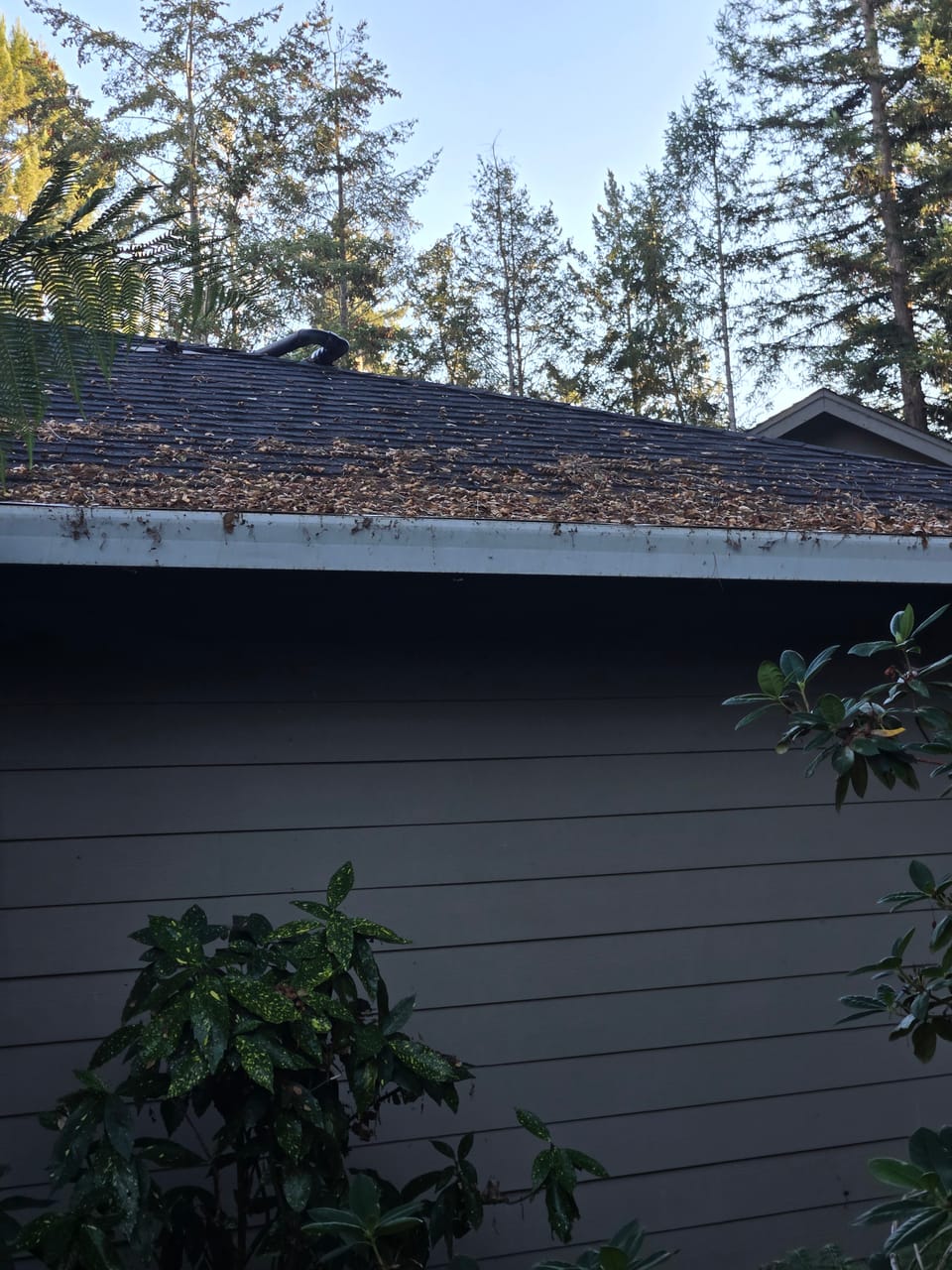
Are leaves and pine needles allowed in Zone 0?
Updated October 21, 2026
Not allowed, already lawThis answer follows the Board of Forestry's Zone 0 rule as revised on November 5, 2026, which is not in force yet. Some items are already law, and some cities have their own rules. If so, it says so below.
Fall is when many trees drop their leaves and needles into gutters and against walls. Fall and early winter are also when many of California's worst fires have started: 15 of the 20 most destructive began between September and January. The answer is no: dry leaves and pine needles cannot pile up on the roof, in the gutters or in the first 5 feet around the house, called Zone 0. Where California's defensible space law applies, clearing them is already required. That law sets how much you clear around buildings in fire country. The Board of Forestry's Zone 0 rule, not in force yet, says the same for the first 5 feet.
Already state law
State law already requires a roof free of leaves and needles, and dead leaves, needles and weeds removed from the yard, roof and gutters within 30 feet of the house. It comes from Zone 1 of the defensible space law, the first 30 feet around a building. That law applies now to every building in a State Responsibility Area (SRA), mostly rural land where CAL FIRE handles wildfire, in any fire hazard zone. In Local Responsibility Areas it applies in Very High fire hazard zones. Fire inspectors check it now. Source: PRC 4291, 14 CCR 1299.03
- Zone 0 is the first 5 feet out from the house, or up to the property line if that is closer.
- Why it matters: embers are burning bits of bark and leaves that wind carries ahead of a wildfire. A gutter full of dry needles is an easy place for them to land and start a fire.
- The chart below shows the month each of California's 20 most destructive wildfires started. Look at how many came in fall and winter, after the dry summer, once many trees start dropping leaves and needles.
Why a few dry leaves matter
In a 2008 test, NIST, the federal standards lab, and Japan's Building Research Institute blew embers at a roof with a plastic gutter full of dry pine needles and leaves. The needles smoldered, then burst into flames, and the heat melted the asphalt shingles above. In that test the flames did not spread up the roof. The researchers said the images "clearly show the dangers of simply not cleaning gutters."
Clearing dead plants around a house also shows up in real fires. California's Legislative Analyst's Office, which advises the Legislature, summed up the research in a 2021 report:
- About twice the survival rate. In a study of two large San Diego County fires, homes with plants cleared within 30 feet survived at about twice the rate of homes without that clearing.
- About 5 times the odds of loss. CAL FIRE looked at the seven largest fires of 2017 and 2018. For homes that did not meet the defensible space law, the odds of being destroyed were roughly 5 times higher.
Those studies count all dead plants and brush, not leaves alone. But leaves and needles are the part that comes back every year.
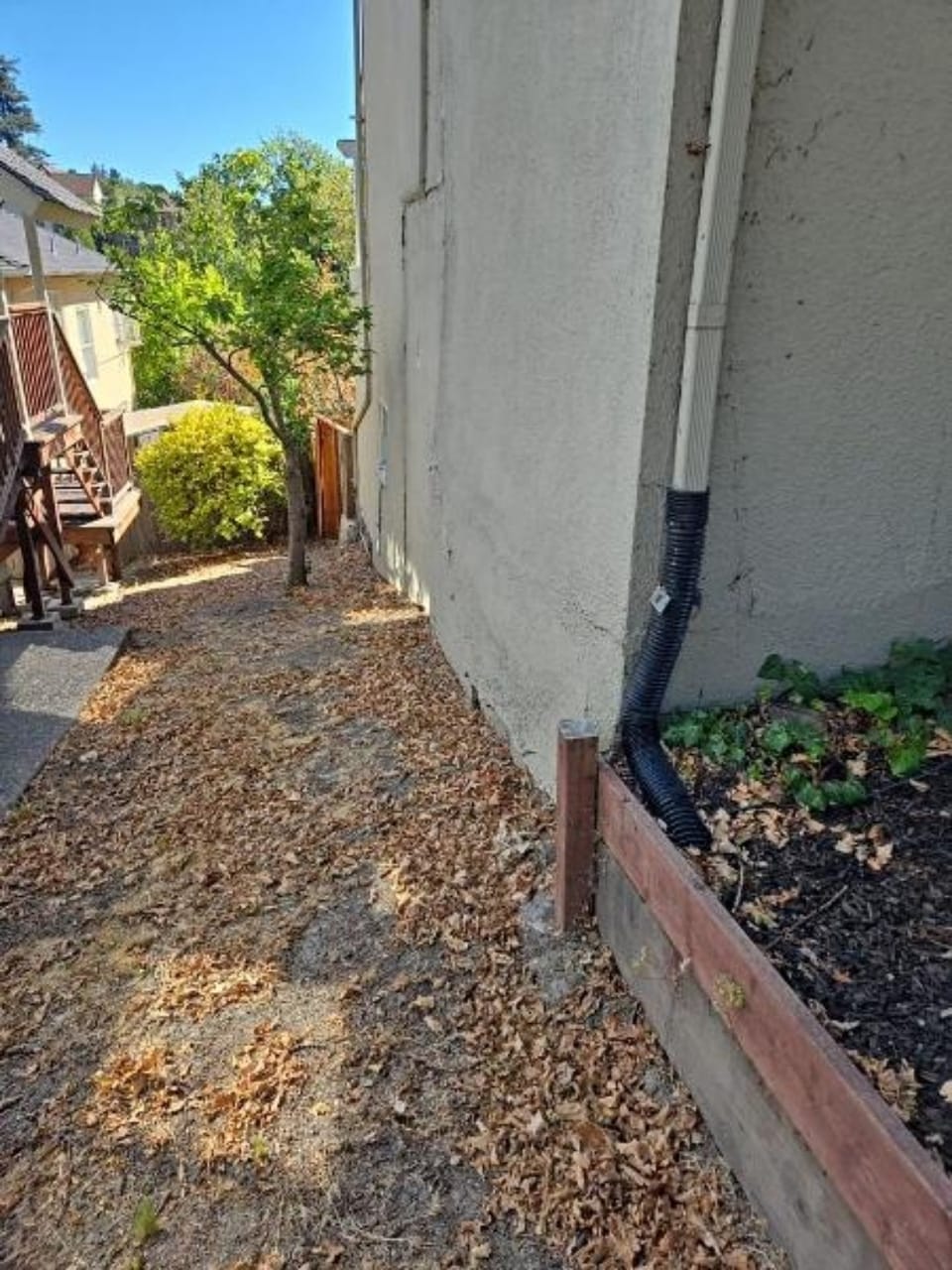
Where leaves and needles pile up
Leaves tend to collect in corners, against walls and in low spots on the roof. Check these four places first.
- 1. Roof and valleys. Sweep or blow off the roof, then check the valleys, where two roof slopes meet. In the same 2008 tests, embers got stuck where two roof sections met and melted the shingles there. They did not start a fire in that test, but they show where embers collect.
- 2. Gutters. Scoop them out and flush the downspouts. Use a sturdy ladder, or hire it out if your roof is steep or two stories.
- 3. Base of the walls. Rake out the corners, the strip along the foundation and behind the air conditioner or trash bins.
- 4. Decks. Sweep the deck boards and the gaps between them, and rake out what blows underneath. State law already says to clear plants and stored things that burn from under decks and stairs. More on what can go under a deck.
Bag the leaves or put them in your green waste bin. Do not pile them at the edge of the 5 feet, where embers can light the pile.
When to clean: before fire season and again in late fall
Many checklists say to clean the gutters before fire season. That is a good start, but many trees drop their leaves later. Pines, cedars and other needle trees shed their oldest needles in fall, University of Illinois Extension says. Oaks that lose their leaves for winter, like California's blue and valley oaks, usually start changing color and dropping them in November, according to UC Davis. Fall is also when many of the worst fires started: October alone had 7 of the 20 most destructive (see the chart near the top). So a gutter you cleaned in spring can be full again by fire weather in fall.
Our take: clean twice a year. Once in late spring, before the hills dry out, and again in late fall, after your trees drop. If you have big pines or oaks over the roof, look in the gutters after every windy day in fall.
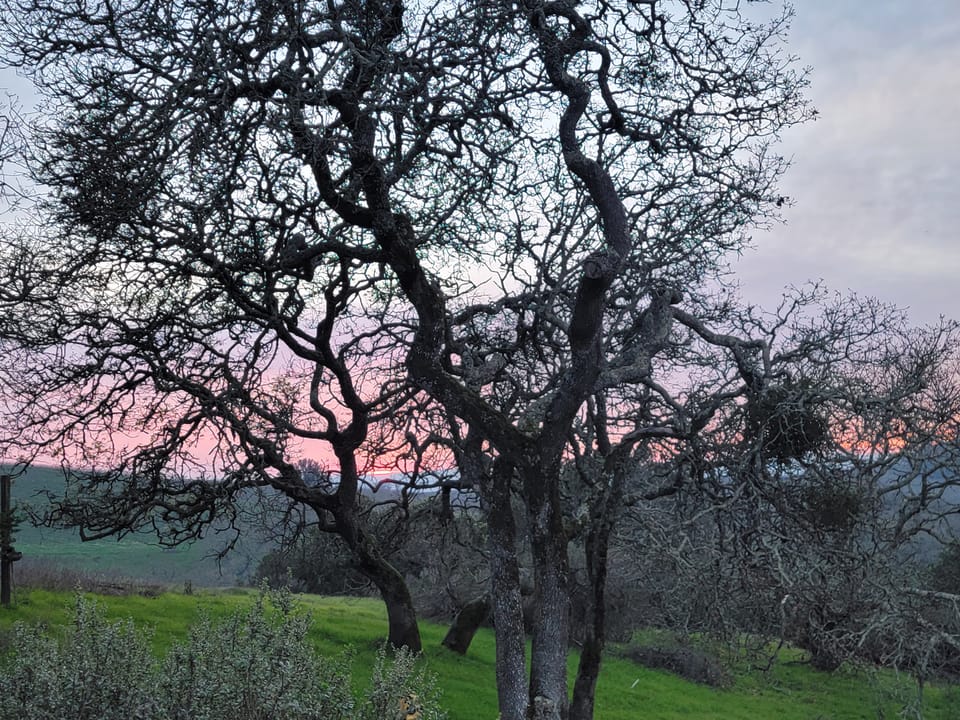
Fall leaf drop is also a good reason to trim. Branches over the roof drop their leaves straight into the gutters. How far branches need to be from the roof.
Does this apply to my home yet?
Partly. The roof, gutter and 30-foot yard limits are law now where the defensible space law applies (see who it covers below). The Board of Forestry rule is not in force yet.
- Law now. State law requires a roof free of leaves, needles and other plant material. The state's defensible space rules also say to remove dead leaves and pine needles from the yard, the roof and the rain gutters within 30 feet of the house, called Zone 1. From 30 to 100 feet, called Zone 2, a layer of fallen leaves and needles up to 3 inches deep is allowed.
- Who it covers. Every building in a State Responsibility Area, mostly rural land where CAL FIRE handles wildfire, and occupied buildings in Very High fire hazard zones in Local Responsibility Areas (Government Code 51182). Check whether your address is covered.
- The Board of Forestry rule. It says to keep fallen leaves and tree needles out of the first 5 feet, off the roof and out of the rain gutters (rule text). Once it takes effect, existing homes would get 3 years to do this. California's Board of Forestry and Fire Protection withdrew its August 2026 rule from the Office of Administrative Law, the state office that must approve it. It adopted a revised rule on November 5, 2026. It is not in force. Check where the Board of Forestry rule stands now.
- Some cities do not wait. San Diego, Berkeley, Auburn and South Lake Tahoe have their own Zone 0 rules. See local Zone 0 rules.
Common questions
- Do I need gutter guards? Not for the law. IBHS Wildfire Prepared Home (WPH), a home designation you can share with your insurer, asks for guards that do not burn only at its higher level, WPH Enhanced. At the base level, WPH Essential, it asks for gutters that do not burn, like metal, kept clear (IBHS checklist). More on gutters and eaves for insurance.
- Can I leave leaves under the trees farther out? Past 30 feet, yes, up to 3 inches deep. Inside 30 feet, the law says to remove dead leaves and needles.
- What about a pine needle or bark mulch bed by the house? Both burn. Why mulch by the wall is a problem and what to use instead.
To see all three zones on your own lot, try the defensible space calculator on Home Ready Sonoma, our sister site. Then run the yard check below to see what else to fix in the first 5 feet.
What insurers ask for now
IBHS Wildfire Prepared Home (WPH) is a home designation many California insurers use. WPH Essential asks you to keep the roof, gutters and downspouts clear of leaves and needles, with gutters made of metal or another material that does not burn. WPH Enhanced adds gutter guards that do not burn. See how the lists differ.
Source: IBHS.
What to do instead
Rake the first 5 feet down to bare soil, gravel or pavement. Clear the roof and gutters before fire season, and again in late fall after your trees drop their leaves and needles.
Timing: Roof, gutters and the first 30 feet: now, where the defensible space law covers you. The Board of Forestry rule: once it takes effect, existing homes would get 3 years to clear leaves and needles from the first 5 feet.
Source
- Notice of proposed emergency action: Zone 0 defensible space, California Board of Forestry and Fire Protection, August 20, 2026
- Public Resources Code section 4291 (defensible space, including Zone 0), California Legislature, via Justia, checked October 19, 2026
- 14 CCR 1299.03: defensible space requirements, California Board of Forestry and Fire Protection, via Cornell Legal Information Institute, checked November 18, 2026
- Top 20 Most Destructive California Wildfires, CAL FIRE, February 7, 2025
- Investigating the vulnerabilities of structures to ignition from a firebrand attack (2008, Fire Safety Science 9, pages 143 to 154), NIST and Japan's Building Research Institute (Manzello, Shields, Hayashi and Nii), checked October 22, 2026
- Reducing the Destructiveness of Wildfires: Promoting Defensible Space in California, Legislative Analyst's Office, September 2021
- Government Code section 51182 (defensible space in Very High fire hazard zones in Local Responsibility Areas), California Legislature, via Justia, checked October 19, 2026
- Wildfire Prepared Home: How-To Prepare Checklist, Insurance Institute for Business and Home Safety, checked November 19, 2026
- Evergreens losing needles: fall needle drop, University of Illinois Extension, October 8, 2020
- Sierra oaks lose leaves early this year, UC Davis, October 18, 2001
- Notice of emergency action: Zone 0 defensible space (revised rule adopted November 5, 2026), California Board of Forestry and Fire Protection, November 5, 2026
Related questions
- Can I have bark mulch in Zone 0?
- Is gravel allowed in Zone 0?
- Can I store firewood next to my house?
- Can I have grass in Zone 0?
Photos by Devan Hemmings unless noted.